Overview
Syllabus overview
Organisation of Software Engineering 11–12
The Year 11 course provides students with opportunities to develop and apply an understanding of the fundamental elements involved in creating software.
The Year 12 course provides students with opportunities to extend their knowledge, understanding and skills in the development of software. A major software engineering project provides students with the opportunity to further develop project management skills.
Figure 1 shows the organisation of Software Engineering 11–12.

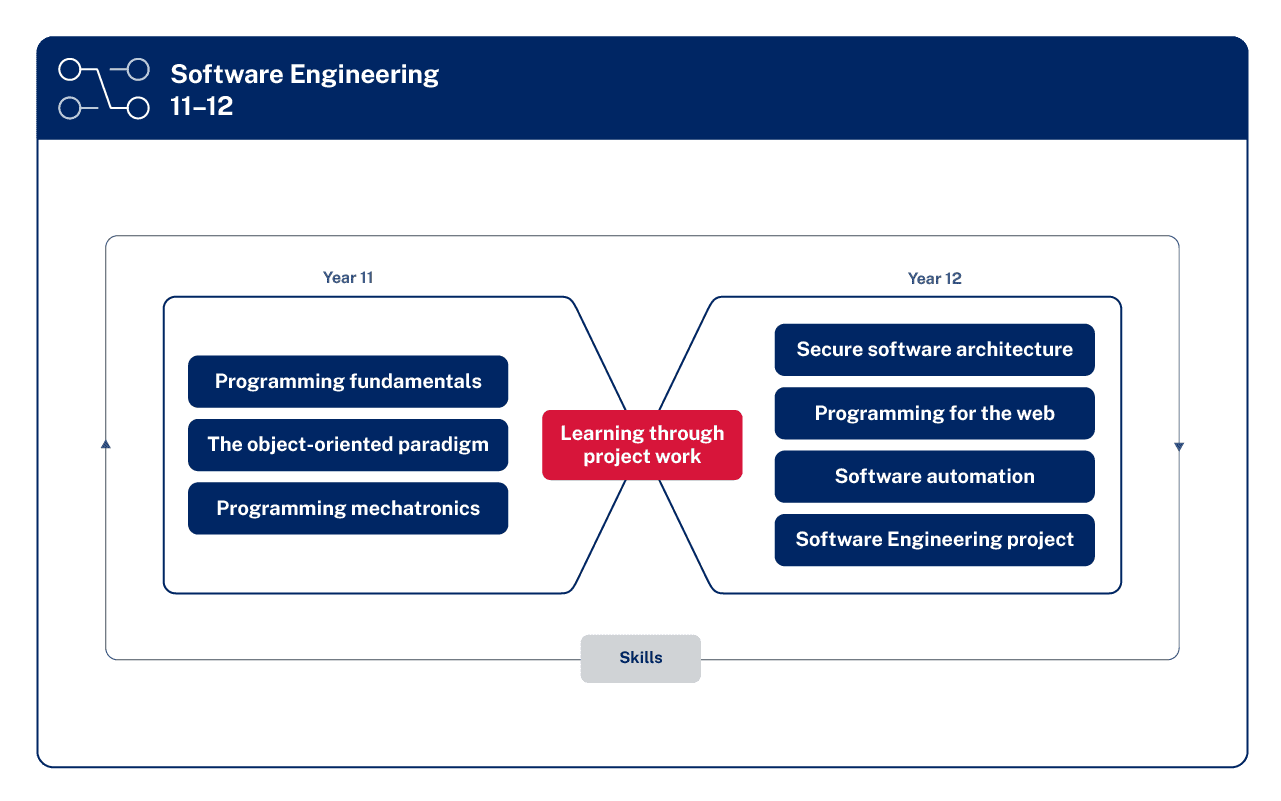
Image long description: This is a diagram outlining the organisation content for the Software Engineering 11–12 Syllabus. Content is listed in boxes, Programming fundamentals, The object-oriented paradigm, and Programming mechatronics fall under Year 11 on the left. Secure software architecture, Programming for the web, Software automation and Software Engineering project fall under Year 12 on the right. In the middle is Learning through project work, with lines coming from this box and encircling the content. Surrounding all content of the diagram is a line which is joined at the bottom by a box labelled, Skills. This demonstrates that Skills is being both developed and used in all focus areas.
Protocols for collaborating with Aboriginal and Torres Strait Islander Communities
NESA is committed to working in partnership with Aboriginal Communities and supporting teachers, schools and schooling sectors to improve educational outcomes for young people.
It is important to respect appropriate ways of interacting with Aboriginal Communities and Cultural material when teachers plan, program and implement learning experiences that focus on Aboriginal and Torres Strait Islander Priorities.
Indigenous Cultural and Intellectual Property (ICIP) protocols need to be followed. Aboriginal and Torres Strait Islander Peoples’ ICIP protocols include Cultural Knowledges, Cultural Expression and Cultural Property and documentation of Aboriginal and Torres Strait Islander Peoples’ identities and lived experiences. It is important to recognise the diversity and complexity of different Cultural groups in NSW, as protocols may differ between local Aboriginal Communities.
Teachers should work in partnership with Elders, parents, Community members, Cultural Knowledge Holders, or a local, regional or state Aboriginal Education Consultative Group. It is important to respect Elders and the roles of men and women. Local Aboriginal Peoples should be invited to share their Cultural Knowledges with students and staff when engaging with Aboriginal histories and Cultural Practices.