Overview
Syllabus overview
The Health and Movement Science 11–12 Syllabus aligns with the Health and Movement Science Life Skills 11–12 Syllabus to provide opportunities for integrated delivery.
Through collaborative curriculum planning, it may be decided that Life Skills outcomes and content are the most appropriate option for some students with intellectual disability.
Organisation of Health and Movement Science 11–12
The Year 11 and 12 course is structured to provide students with opportunities to develop and apply their knowledge, understanding and skills of health and movement concepts.
The following diagram provides an illustrative representation of elements of the course and their relationship.

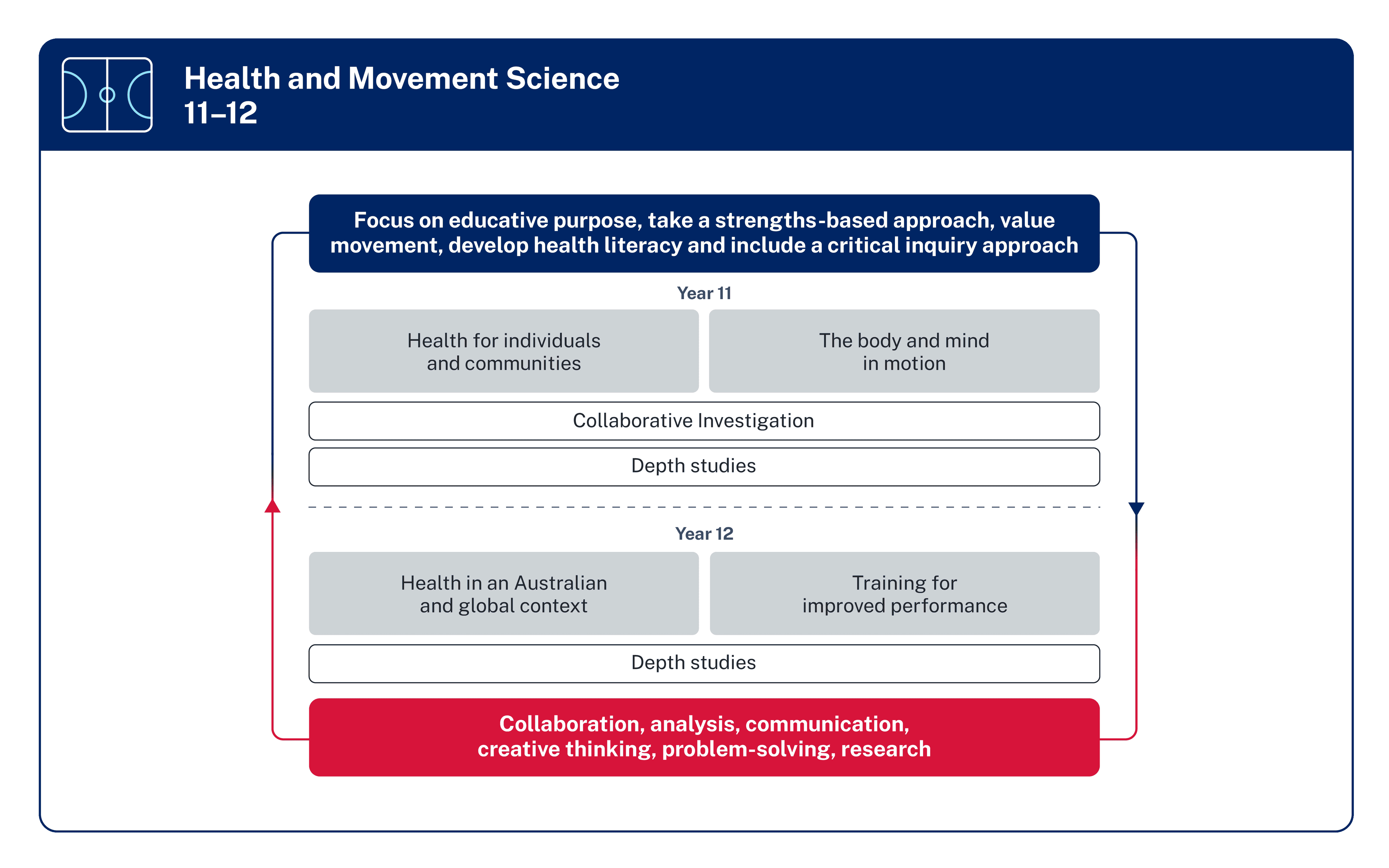
Image long description: The Health and Movement Science 11–12 Syllabus is shaped by the 5 propositions. Year 11 is organised into 2 focus areas: Health for individuals and communities; and The body and mind in motion. Year 12 is organised into 2 focus areas: Health in an Australian and global context; and Training for improved performance. Depth studies are also to be embedded in Years 11 and 12, and a Collaborative Investigation embedded in Year 11. The skills of collaboration, analysis, communication, creative thinking, problem-solving and research underpin the syllabus content. These skills encircle the syllabus structure along with the propositions ‘Focus on educative purpose, take a strengths-based approach, value movement, develop health literacy and include a critical inquiry approach.’
Protocols for collaborating with Aboriginal and Torres Strait Islander Communities
NESA is committed to working in partnership with Aboriginal Communities and supporting teachers, schools and schooling sectors to improve educational outcomes for young people.
It is important to respect appropriate ways of interacting with Aboriginal Communities and Cultural material when teachers plan, program and implement learning experiences that focus on Aboriginal and Torres Strait Islander Priorities.
Indigenous Cultural and Intellectual Property (ICIP) protocols need to be followed. Aboriginal and Torres Strait Islander Peoples’ ICIP protocols include Cultural Knowledges, Cultural Expression and Cultural Property and documentation of Aboriginal and Torres Strait Islander Peoples’ identities and lived experiences. It is important to recognise the diversity and complexity of different Cultural groups in NSW, as protocols may differ between local Aboriginal Communities.
Teachers should work in partnership with Elders, parents, Community members, Cultural Knowledge Holders, or a local, regional or state Aboriginal Education Consultative Group. It is important to respect Elders and the roles of men and women. Local Aboriginal Peoples should be invited to share their Cultural Knowledges with students and staff when engaging with Aboriginal histories and Cultural Practices.